Thoughts on Dalgliesh, from the beginning.

July 22nd, 2011 § 0

CoverHerFace
Earlier this month I decided to re-read Cover Her Face, published in 1962 and the first in P.D. James’ successful Detective Adam Dalgliesh series. As this book is approaching it’s 50th year in print — and because I so thoroughly enjoyed reading it — I thought it would make a suitable subject with which to revive this blog.

As is so often the case with whodunnits, the finer details are inherently susceptible to the imperfections of a reader’s memory. In my case, having read this book at least 20 years ago, my recollection of the story was all but nonexistent. So, aside from an understanding of Dalgliesh’s character from my reading of the whole series over a span of several years, my reading of this book was fresh and new.

P.D. James has established herself in the highest ranks of British crime fiction over the years, due in large part to the success of the Dalgliesh series. This praise is well-deserved, and I’ll take a few moments to state some of the reasons why I feel this is the case.

First, Dalgliesh, as a series character, reveals himself to the reader slowly, developing incrementally with each book in the series. This sets him apart from most other characters in similar series. The norm is to fully dress a character, assign them numerous unique traits, and work those into the story. Here, James tries a much different approach. In may places in the book, I was conscious of how little of Dalgliesh’s personality is expressed. In fact, for much of the first book, he appears little more than a shadowy force of detection who conducts his investigation quietly in parallel with the main storyline. This narrative path flows and weaves through the lives of the family of suspects, each engaged in various inquiries, investigations and machinations, trying to determine how likely they are to be named as suspects by the police. As such, we get to know the great detective more indirectly, through his influence on the suspects and by his reputation than is common with other detectives. When I compare Dalgliesh to other memorable figures in near-contemporary English detective fiction — Morse, Linnley, et. al. — I appreciate how risky and unique it is for a writer to not over-develop the character and season them with details of musical taste, shaving-soap preference, classic cars, and other accoutrements. This absence of detail about the detective creates a wonderful sense of suspense that builds up as the narrative follows several obvious paths of inquiry. These inquiries are for most of the book undertaken by the various suspects themselves, and Dalgliesh’s investigation is revealed to be thorough in passing, but we only get glimpses into his investigation at moments when he is interviewing suspects in the home or when he crosses paths with one or more of the other characters. Ultimately, the stage is well set for Dalgliesh to summon all the suspects together near the end and summarily expose each suspect’s unseemly doings before ultimately uncovering the actual murderer. Always the detective, Dalgliesh conveys few of his thoughts until the final reveal.

Even though this is James’ first book, her handling of the plot shows incredible control. She writes in a somewhat formal, perhaps high-brow style, with sharp, precise descriptions of place and person, and quickly engrosses the reader in the social dynamics of a household where a crime will take place. On their own, the characters in the book appear a bit old and dusty, suited to the time as members of a diminishing pre-war landowning social class. The characters may seem somewhat ill-at-ease and anachronistic by today’s standards. The isolation of the characters and their social milieu in a distinctive past enhances the reader’s appreciation for James’ writing as it helps suspend the reader in a comfortable yet unfamiliar “closed room” where the characters interact, and react. Like all good writers, she not only has firm control of the characters, but she has control over the psychological environment in which relationships and motives are formed. This makes the final reveal all the more tantalizing, as this story, as simple and isolated as it may appear, is one which reveals more wrongdoing than just the act of murder. In keeping with the format of the whodunnit, the reader is led to think “there are 10 people in the room and one of them is a murderer.” But this is an oversimplification which adds a great deal of depth to the solution of the crime and exposes many in playing a role in the murder by indirectly contributing to the plight of the victim. (I’m trying hard here to make a point without letting loose any spoilers.)

Like all great whodunnits, the setting has to be set firmly in a social, psychological and physical setting, and the final reveal has to remain plausible even under the strain of time. As readers of more current crime fiction will attest, the format of the classic whodunnit has become in itself less favored, in part because it implies more enclosed, personal settings, an intellectually dominant and watchful sleuth, and rarely allows for wild deviations in structure. It is also less accepting of technological intrusion and over-played, senseless violence. Whodunnits with maniacal axe-wielding, computer hacking villians are perhaps just too much to suspend a reader’s disbelief. Frequently, these stories involve more intimate crimes employing poisoning or strangulation, often only involving a single victim and multiple but limited number of known suspects. Cover Her Face fits this general description in almost all ways.

Cover Her Face is a classic whodunnit, in the tradition of Agatha Christie and Dorothy L. Sayers, but lacking the pecularities of character that drive series like Hercule Poirot or Lord Peter Wimsey. Here we have a Detective who is calm, focused and in many ways under-exposed. He exerts considerable influence on the story without asserting too much of his personality, and the result is one of the better set-ups for a great series-character.

If you have not read the Dalgliesh series, I highly recommend it. Nothing I’ve revealed here will diminish your surprise or enjoyment. I would highly recommend reading the series in sequence, and to that end, I’m including a list of the books in order below for reference. I am determined to re-read the entire series myself in the coming months and look forward to seeing if some of the positions I’ve stated here hold up. P.D. James is a master of form and offers great stories which age exceptionally well over time.

The complete Adam Dalgliesh series are:

  1. Cover Her Face (1962)
  2. A Mind to Murder (1963)
  3. Unnatural Causes (1967)
  4. Shroud for a Nightingale (1971)
  5. The Black Tower (1975)
  6. Death of an Expert Witness (1977)
  7. A Taste for Death (1986)
  8. Devices and Desires (1989)
  9. Original Sin (1994)
  10. A Certain Justice (1997)
  11. Death in Holy Orders (2001)
  12. The Murder Room (2003)
  13. The Lighthouse (2005)
  14. The Private Patient (2008)

Welcome to the Kindle Million Club.

August 11th, 2010 § 0

Stieg Larsson (Photo credit: Per Jarl / Expo / SCANPIX/Press Association Images)

Stieg Larsson (Photo credit: Per Jarl / Expo / SCANPIX/Press Association Images)

There have been a couple interesting developments in the Stieg Larsson story since I last posted. Most noteworthy is the announcement by Amazon.com that Larsson is the first author to sell over a million digital copies on the Kindle. Amazon have created a new Kindle Million Club and Larsson is the first (and currently the only) member.

Back in May, the New York Times ran a lengthy article on Stieg Larsson by Charles McGrath which is very worth reading. It’s called The Afterlife of Stieg Larsson.

Sarah Weinman recently wrote an excellent article for The Daily Beast which looks at the influence of Maj Sjöwall and Per Wahlöö on Stieg Larsson.

Noomi Rapace as Lisbeth Salander

Noomi Rapace as Lisbeth Salander

I would like to give the Swedish film version of The Girl With The Dragon Tattoo a most enthusiastic endorsement. If you have not yet seen it, it has recently been released on DVD and is also available for download in standard and HD versions from various online vendors, including the iTunes store. Here in the U.S., the second film in the series, The Girl Who Played With Fire, is currently in theaters.

I was recently in a bookstore in Montana and noticed a photo of Noomi Rapace in character with a big question mark drawn over her head. I take it not everyone thought her ideal for the role. I couldn’t disagree more. There is increasing buzz about the American film version in development by Sony Pictures. Producer Scott Rudin and Director David Fincher have apparently been busy casting the likes of Daniel Craig to play Mikael Blomkvist and Robin Wright as Erika Berger. Entertainment Weekly today reports that Stellan Skarsgård is in negotiations to play the role of Martin Vanger. Still no word on who will get the role of Salander, but there are lots of names being discussed. Having enjoyed the books so much, I was apprehensive about any film version, and having been so pleased with the Niels Arden Oplev version, I’m still not convinced Hollywood is going to bring anything except more franchise power to the table. (Will there be a Salander action figure, I wonder?)

I am a bit disappointed that the commercial success of the Millennium Trilogy has not brought greater English-language readership to other great Scandinavian crime writers. There are many who deserve to be read. Amazon may have sold a million digital copies of Stieg Larsson, but they have only released three of Henning Mankell’s Wallander series for the Kindle and I doubt seriously if the combined ebook sales of Mankell, Hakan Nesser, Asa Larsson and Helene Tursten would ever warrant inclusion in an Amazon sales club. It is most certainly not a reflection of the quality of these writers. If anything it shows how isolated and remarkable the Stieg Larsson phenomenon really is.

Wallander

February 26th, 2010 § 0

Henning Mankell

Henning Mankell

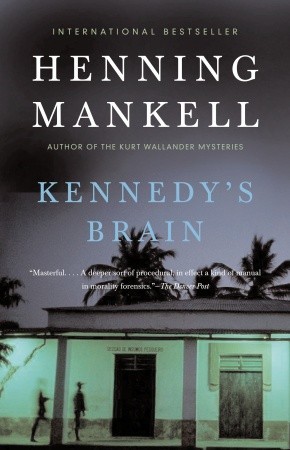
If you haven’t yet found Henning Mankell’s Kurt Wallander series, this post is for you. Here is a series which is guaranteed to take the casual reader of crime fiction and turn them into a fully committed Scandinavian crime addict. This is an extraordinary series which should be savored. A good series is really a special and rare thing. In mystery and crime fiction, series are very common, but few are capable of maintaining such consistent intensity as Henning Mankell’s Kurt Wallander series.

Lately, many people have asked me what the sequence of the series is, so I’ll post it here for reference.

The books in the series are:

Faceless Killers
The Dogs of Riga
The White Lioness
The Man Who Smiled
Sidetracked
The Fifth Woman
One Step Behind
Firewall

Those are the main novels in the series. Then there are the following two which extend the series. The Pyramid is the story of Wallander’s first case and contains several other shorter stories all of which expand the backstory. I recommend reading this collection after the novels as they bring the story right up to the morning on which the story in Faceless Killers starts. It makes a nice circle. Before the Frost is a novel featuring Wallander’s daughter Linda in her first investigation. Linda appears in the series as a wandering young woman who tried various jobs and in the end makes the surprising decision to follow in her father’s footsteps. If you enjoyed Kurt, you’re sure to enjoy Linda as the investigator.

The Pyramid: And Four Other Kurt Wallander Mysteries
Before the Frost — featuring Kurt Wallander’s daughter Linda.

Incidents in The Nordic Scene

February 26th, 2010 § 0

It’s no secret that Scandinavia is hot and getting hotter, at least for readers of crime fiction.
Here’s a round up of three interesting stories from the blogiverse:

Quickly I wanted to point out a short but thoughtful post addressing the ever popular question: what makes all this recent nordic fiction so good? Peter Rozovsky at Detectives Beyond Borders comments on why Scandinavian crime fiction is so good in his recent post, Here’s to you, Mr. Robinson, or the real secret of Nordic crime fiction. In essence, praise good writing and storytelling before getting carried away with long-winded sociological analysis. Sounds good to me.

Eva Gabrielsson

Eva Gabrielsson

Since I’ve recently finished reading The Girl who Kicked the Hornets’ Nest, I’ve been following the chatter about Stieg Larsson with some interest. First, I think it significant that the upcoming U.S. publication of the third installment of the Millennium Trilogy on May 25th will finally allow American’s to complete the saga of Salander. It is also interesting to note that the first two tomes of this trilogy are still on the top of US bestseller lists. NPR reported last week that The Girl Who Played with Fire was number two on the American Bookseller’s Association’s Hardcover Fiction Bestsellers list, and The Girl with the Dragon Tattoo is number 1 on the paperback list. This sets the stage for a big American reception for The Girl who Kicked the Hornets’ Nest. All I can say is I am delighted to see these great books get such attention in the American marketplace.

My Friend Stieg Larsson, by Kurdo Baksi

My Friend Stieg Larsson, by Kurdo Baksi

Like all publishing successes, there’s controversy. I’ve noted previously the circumstances regarding Larsson’s long-time partner, Eva Gabrielsson, who — due to a twist in Swedish Probate practice governing inheritance in common law relationships — has not seen any royalties for the books, and is reportedly writing a book of her own about Larsson.

In January, a new Swedish biography of Larsson was released which takes the controversy one big step further. Journalist Kurdo Baksi alleges in his recent biography Min vän Stieg Larsson (My Friend Stieg Larsson) that Larsson wasn’t objective in his journalism, and that he even fabricated stories and facts on occasion. Norstedts, the publishers of the biography state on the book’s page on their website, that “Kurdo Baksi was one of Stieg’s very close friends,” which raises the usual questions associated with biographers and their subjects and how the reading public is supposed to interpret the nature of the relationship before the biography was written. Obviously, the credibility of the book rests on the fact that the author was a close confidant and coworker. In my mind, good friends don’t take money to question the integrity of someone’s professional work. The English language, Swedish newspaper, The Local, ran a story with Eva Gabrielsson’s response on January 19th. Gabrielsson calls the allegations slander. Say what you will about Larsson now that he’s gone, one fact eclipses all others: Larsson’s has authored the trilogy of the decade. Or did he?

Yes, it is now being reported that Larsson may not have written the Millenuim Trilogy alone or at all. Danish newspaper B.T. ran a story on January 26 which declared “Stieg Larsson skrev ikke bøgerne alene” (Stieg Larsson Didn’t Write Books Alone). This story summarizes the situation:

…the Swedish newspaper Dagens Nyheter, which last week first raised doubts about whether Stieg Larsson was even able to write the popular crime trilogy. Criticism of the work comes from a former journalist colleague, Anders Hellberg, who worked with Larsson on the telegraphic agency TT, where Stieg Larsson was a journalist and news graphics agent for 20 years.

(translation my own)

Hellberg has apparently not made any suggestion as to who he thinks wrote the books with or for Larsson.

Finally, there are some newly available titles in English which have caught my attention. I have to say that I am happily awaiting the arrival of my copy of The Man From Beijing, the newest US release from Henning Mankell.

Also, Nordic Bookblog has an interesting post about upcoming arrivals from Sweden’s Lars Kepler and Jens Lapidus.

Lars Kepler is the pen name for the writing pair, Alexandra Coelho Ahndoril and Alexander Ahndoril, and their first book to be published in English will is The Hypnotist. This title has been very popular in its native Sweden and has been compared to Stieg Larsson, and has been generally well received in other parts of Europe, though the association elsewhere with Larsson has not been so easy to preserve. Publisher’s Weekly described last March how this title was the subject of an aggressive bidding war in English translation, and ultimately ended up with HarperCollins for release in the UK.

Jens Lapidus is a Swedish criminal defense lawyer turned crime writer who has so far published two books in his Stockholm Noir trilogy. First in the series is Snabba cash (2006) — the English title often appears not as “Fast Cash” but as “Easy Money” — and Aldrig fucka upp (2008) (Never Fuck Up).

I’ve not been able to find any specifics about who is publishing the English translations in the U.S. or when we can expect to see titles given release dates, but Peter at Nordic Bookblog suggests that we could start seeing titles in 2010.

The Girl Who Kicked the Hornet’s Nest, pt. 1

January 26th, 2010 § 0

hornetsnestThe summer of 2009 will in many ways be remembered as the summer I read The Girl Who Played with Fire. When I finished, I was so ready to pick up the third in the series and start reading. But that was not to be. The dates for U.S. release are now set for May 2010, and I’m just not that patient. So I’ve just recieved, all the way from the U.K. my hardcover copy of The Girl Who Kicked the Hornet’s Nest. I’m going to try to wait for a few days to clear some items from my currently reading shelf before I delve in, but it’s only a matter of time before I’m back in the good company of Lisbeth Salander and Mikael Blomkvist.
I’ll say here that I’m quite surprised that I feel this way. I enjoyed The Girl With the Dragon Tattoo, but it did not impress me the way the second book did. It’s a classic trilogy-reader’s dilemma: The first book was good, but the second was amazing. The third could bring either great gratification or woeful disappointment. Now how many books can you remember that warranted such feelings of anticipation? I’ll read and, unless paralyzed with discontent or glee, I’ll review sans-spoilers (as many US reader’s have yet to get their hands on it). Stay tuned for part 2.

The Scarlet Thread of Murder: Arthur Conan Doyle and the Holmes Tradition

January 25th, 2010 § 1

Arthur Conan Doyle

Arthur Conan Doyle

With the release of the new Guy Ritchie Sherlock Holmes film there is once again a renewed interest in the great detective. The active hype in popular media over the new film presents interested readers with a great opportunity to rediscover the true Holmes, or take a look at some of the newer written incarnations of the character. With that in mind, here are some thoughts on the tradition of Sherlock Holmes, a fairly detailed bibliography, and some reading recommendations, concluding with a thought or two on the recent popular film treatment starring Robert Downey, Jr., Jude Law and Rachel McAdams.

Arthur Conan Doyle is widely considered one of the most important figures in Crime Fiction. He was born May 22, 1859 in Edinburgh. His father was not particularly well remembered in his personality or profession, but was known to have been an accomplished drinker. Doyle recalled in later life that his mother Mary Doyle was an avid reader and story-teller and that while he did not have many recollections of his youth, he did recall fondly the “vivid stories she would tell me”. He studied medicine under Joseph Bell (1837-1911), a surgeon and President of the Royal College of Surgeons of Edinburgh who is considered by many to be the father of forensic pathology.

Conan Doyle’s relationship to Bell is significant in his development of the Sherlock Holmes character both in more scholarly biography as well as popular treatment. An exploration of this relationship, as stated by Julian Symons in his 1979 biography, Portrait of an Artist reads, “Doyle always said the model for these deductive skills was Dr. Joseph Bell, surgeon at Edinburgh Infirmary, and one of the professors at Edinburgh University when Conan Doyle was a medical student, In appearance Bell was thin and dark, with piercing gray eyes and a narrow aquiline nose, so that he had some resemblance to the imaged Sherlock Holmes. [Doyle] used the Bell deductive approach when he began to write the stories. Dr. Bell modestly said that Conan Doyle had exaggerated his powers” The BBC produced in 2000 a television program called “Murder Rooms: The Dark Beginnings of Sherlock Holmes” starring Ian Richardson as Bell and Robin Laing as Conan Doyle. The show exaggerated the relationship significantly, and presented the relationship in the light of Bell as Holmes and Conan Doyle as Watson.

Beeton's Christmas Annual 1887

Beeton's Christmas Annual 1887

Doyle began writing while going through the failure of a business venture. His first published Holmes story was the novel A Study in Scarlet which he sold for £25 to Ward Lock & Co. and published in Beeton’s Christmas Annual. The story was originally titled “A Tangled Skein“ and was sold only after numerous rejections. The title was changed to A Study in Scarlet, as a reference to a conversation between Holmes and Watson in the novel in which Holmes describes his craft:

“There’s the scarlet thread of murder running through the colourless skein of life, and our duty is to unravel it, and isolate it, and expose every inch of it.”

The full novel was published in a single volume in July 1888 by Ward Lock & Co. with illustrations by Charles Doyle, Arthur’s father (replacing the illustrations by D. H. Friston which appeared in the Beeton’s Christmas Annual).

There is a great deal in the Biography of Arthur Conan Doyle which the casual reader will find surprising, not the least of which is his interest in Spiritualism. I’ve found that a good biography of Doyle (see Teller of Tales, for a good one) is a great next step after reading the Holmes stories.

The appearance of Sherlock Holmes and Dr. Watson in the literary record forever solidified the character of the detective. Crime writing had most certainly existed before the appearance of Sherlock Holmes, most notably with Edgar Allan Poe and writers like Thomas De Quincey, who is mentioned in the Sherlock Holmes short story ”The Man with the Twisted Lip”.

But for the modern reader there is a far greater, more pointed debt, which includes the popularity of the Victorian era (including this same time period outside the British Empire) in Crime Fiction, as well as the enduring complexity of the rough-edged, substance-abusing super-sleuth. This character type has been successfully redrawn in endless variety ever since.

In the new film, the character of Irene Adler is played by Rachel McAdams and is a central character. Adler is thought of as the most significant female character in the Holmes stories even though she only appeared in a single story, ”A Scandal in Bohemia“ but is mentioned (usually as ”the late Irene Adler“ in several other stories, including ”A Case of Identity“, ”The Adventure of the Blue Carbuncle“, ”His Last Bow“ and again cryptically in ”The Five Orange Pips“ when Holmes states “I have been beaten four times – three times by men, and once by a woman.”

Overall, the film comes across as one would expect: purists who have read extensively in the Holmes Cannon will find it lacking, but the majority will find it entertaining. While many feel Robert Downey, Jr. is a poor choice for Sherlock, it must be said that he brings an interesting dimension to the character never before seen in film of television. The role of Dr. Watson is well played by Jude Law, and in fact, there are details about Watson’s character that are given more emphasis in this film than in any previous version.

Any attentive book-shopper will realize that the interest and box office success of this film has publishers hopeful for a renewed interest in reading Doyle and others. So in closing, we offer a bibliography (by no means exhaustive, but sufficient to get any reader started) and a few recommendations on titles associated with the Sherlock Holmes tradition. Finally, we offer a few suggestions on some terrific recent works set in the Victorian period but in no real way connected to the Holmes characters. Enjoy.

TextLinks:

Joseph Bell, A Manual of the Operations of Surgery, complete text on Google Books or Project Gutenberg.

Bibliography of Arthur Conan Doyle’s Sherlock Holmes:

Novels

  1. A Study in Scarlet (1887)
  2. The Sign of the Four (1890)
  3. The Hound of the Baskervilles (1902)
  4. The Valley of Fear (1915)

Story Collections

The Adventures of Sherlock Holmes (1892)
12 Stories

  1. A Scandal in Bohemia
  2. The Red-Headed League
  3. A Case of Identity
  4. The Boscombe Valley Mystery
  5. The Five Orange Pips (Orig. published in The Strand magazine in November 1891.)
  6. The Man with the Twisted Lip
  7. The Adventure of the Blue Carbuncle
  8. The Adventure of the Speckled Band
  9. The Adventure of the Engineer’s Thumb
  10. The Adventure of the Noble Bachelor
  11. The Adventure of the Beryl Coronet
  12. The Adventure of the Copper Beeches

The Memoirs of Sherlock Holmes (1894)
12 Stories (1894 UK Edition) 11 Stories (1894 US Edition)

  1. Silver Blaze
  2. *The Adventure of the Cardboard Box (UK Edition only. Appeared in the 1917 American version of His Last Bow)
  3. The Adventure of the Yellow Face
  4. The Stockbroker’s Clerk
  5. The Gloria Scott
  6. The Musgrave Ritual
  7. The Adventure of the Reigate Squire
  8. The Adventure of the Crooked Man
  9. The Resident Patient
  10. The Greek Interpreter
  11. The Naval Treaty
  12. The Final Problem

The Return of Sherlock Holmes (1905)

  1. The Adventure of the Empty House” (the return of Holmes)
  2. The Adventure of the Norwood Builder
  3. The Adventure of the Dancing Men
  4. The Adventure of the Solitary Cyclist
  5. The Adventure of the Priory School
  6. The Adventure of Black Peter
  7. The Adventure of Charles Augustus Milverton
  8. The Adventure of the Six Napoleons
  9. The Adventure of the Three Students
  10. The Adventure of the Golden Pince-Nez
  11. The Adventure of the Missing Three-Quarter
  12. The Adventure of the Abbey Grange
  13. The Adventure of the Second Stain

His Last Bow (1917)

  1. The Adventure of Wisteria Lodge
  2. The Adventure of the Cardboard Box
  3. The Adventure of the Red Circle
  4. The Adventure of the Bruce-Partington Plans
  5. The Adventure of the Dying Detective
  6. The Disappearance of Lady Frances Carfax
  7. The Adventure of the Devil’s Foot
  8. His Last Bow

The Case-Book of Sherlock Holmes (1927)

  1. The Adventure of the Mazarin Stone
  2. The Problem of Thor Bridge
  3. The Adventure of the Creeping Man
  4. The Adventure of the Sussex Vampire
  5. The Adventure of the Three Garridebs
  6. The Adventure of the Illustrious Client
  7. The Adventure of the Three Gables
  8. The Adventure of the Blanched Soldier
  9. The Adventure of the Lion’s Mane
  10. The Adventure of the Retired Colourman
  11. The Adventure of the Veiled Lodger
  12. The Adventure of Shoscombe Old Place

Book recommendations:

The New Annotated Sherlock Holmes: The Complete Short Stories (2 Vol. Set) — Indiebound | Amazon
The New Annotated Sherlock Holmes: The Novels– Indiebound | Amazon
The Complete Sherlock Holmes: All 4 Novels and 56 Short Stories Indiebound | Amazon
Teller of Tales: The Life of Arthur Conan Doyle Indiebound | Amazon The Complete Original Illustrated Sherlock Holmes Indiebound | Amazon

There are a near endless number of more modern Holmes pastiches from such writers as Laurie R. King, John R. King, Caleb Carr, Lyndsay Faye, John S. Fitzpatrick, Michael Chabon, and the list goes on and on. (A search on Google for “Sherlock Holmes Pastiche” turns up several years worth of Holmes reading.) In closing, I would like to say that there are many wonderful short stories in the tradition that are most worth reading. A couple of my favorites are Neil Gaiman’s “A Study in Emerald” which is in the collection Fragile Things, and Cara Black’s Irene Adler story ‘Cabaret aux Assasins‘ in the anthology My Sherlock Holmes: Untold Stories of the Great Detective edited by Michael Kurland.

A New Millennium in Hollywood

January 12th, 2010 § 0

It isn’t exactly news, but I was just reading up on The Nordic Bookblog and found Peter’s Dec. 16th post about the prospects of the acclaimed Steig Larsson Millennium trilogy as a possible Sony Pictures acquisition.

GirlWhoKickedHornetsNestBack on Dec. 15th, there was a press release from Sony’s Columbia TriStar Pictures which explained the option deal and credited veteran producer Scott Rudin and Ole Sondberg and Soren Staermose of Sweden’s Yellow Bird Films. This company was behind both the Swedish and BBC Wallander series and an upcoming six-part ninety-minute series based on works by Norwegian writer Anne Holt featuring Inspector Yngvar Stubø and psychologist and lawyer Inger Johanne Vik. Yellowbird have already produced three feature films and a six part TV series based on the Millenium Trilogy in Swedish. The films have been released already in many countries to high acclaim.

So why does Hollywood need to produce an English language version? According to the press release, “Yellow Bird Films has separately completed a filmed Swedish-language adaptation of the novels for Swedish television and home video release. Columbia Pictures is concluding its agreement to option the novels and produce new, English-language productions based upon the material.”

There’s a good article in the Houston Chronicle from January 10th by Maggie Galehouse that discusses the tradition and “art” of adapting novels into films. It takes a close look at the new Peter Jackson film The Lovely Bones and it states matter-of-factly how in Hollywood, “adaptations are presold commodities”. The success of the novel guarantees a high degree of movie ticket sales even if fans of the original book are often left disappointed. I mention this so we can all return here for a disappointment-prempting re-read of this article just before the Lisbeth Salander, Mikael Blomqvist Hollywood debut.

There’s sure to be a great deal of hype about this in the coming months. Stay tuned.

Publisher’s Weekly reports Memorial Set for Laura Hruska

January 12th, 2010 § 0

PW Reports, Soho Press editor-in-chief and co-founder, Laura Hruska, died January 9th after a prolonged illness. A memorial will take place on January 15th.

2010 Global Reading Challenge

January 12th, 2010 § 3

Lately I’ve been amazed by the number of Reading Challenges circulating on the Internet. Social Networks like Goodreads, Facebook and Crimespace abound with such challenges, lists and bookish-memes.

I’ve found one I like and I’m going to do it, and blog about it here.

The challenge is from Dorte Jakobsen in Denmark who blogs at DJ’s Krimiblog and who is part of the FriendFeed Crime and Mystery Fiction group (which I’m proud to say, Hypercrime is now a member of). The challenge has three levels: easy, medium and hard. I’m going to start easy, as follows:

Read one novel from each of these continents in the course of 2010:
Africa
Asia
Australasia
Europe
North America (incl Central America)
South America

From your own continent: try to find a country, state or author that is new to you.

(See the full post with the medium and hard levels here).

I’ve decided this is a perfectly simple and engaging challenge which will allow me to not only read, but blog and review in new territory. So I’m going to add a few details to the challenge.

All books will be crime fiction.
All books will be reviewed here.
The North American read will be a non-American author, set outside of the US (just because, I’m an American and I read a ton of American stuff anyway. This is a good opportunity for me to expand my reading of Mexican, Canadian or Central American writers. After all, that’s the point of the challenge.)

I’ve got stacks of books that I’ve amassed which will get me started on this challenge, so I’ll start thinking about my selections, and post them here as soon as I’m ready. Then I’ll start posting my reviews as I go.

I encourage others to take this challenge. Remember, it’s only 6 books and it could lead you to discover a new favorite book or author. Remember to visit the challenge page to see linked reviews and other peoples reading lists.

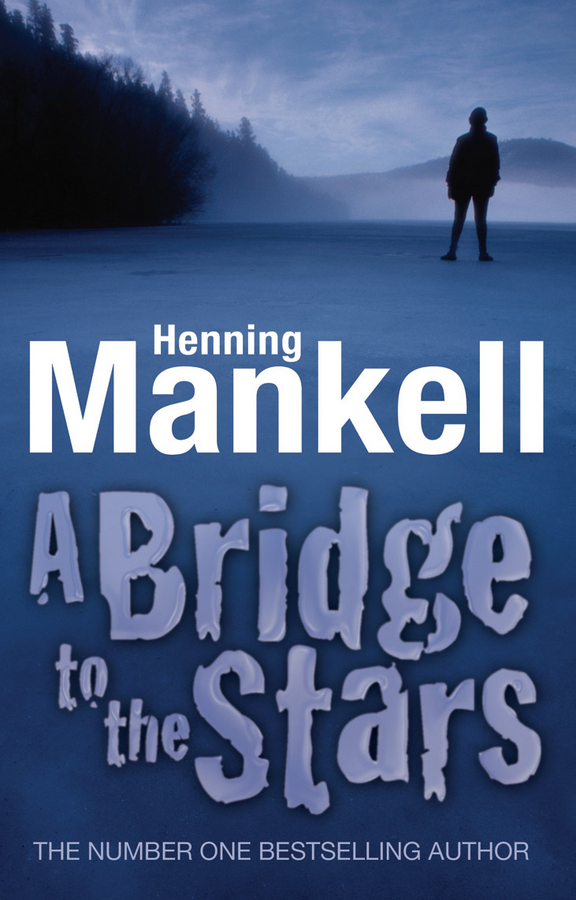
Henning Mankell’s Seven Wonders

January 8th, 2010 § 0

Henning Mankell discusses the seven wonders of his life with Intelligent Life Magazine.